Bolton Hospital
Bolton Hospital Details
Bolton Hospital, the scant remnants of a tower within a medieval hospital lie in a field surrounded by marsh
- Closest To: Bolton, Edlingham, Alnwick
- Access: No Access
- Grid Reference: NU106137
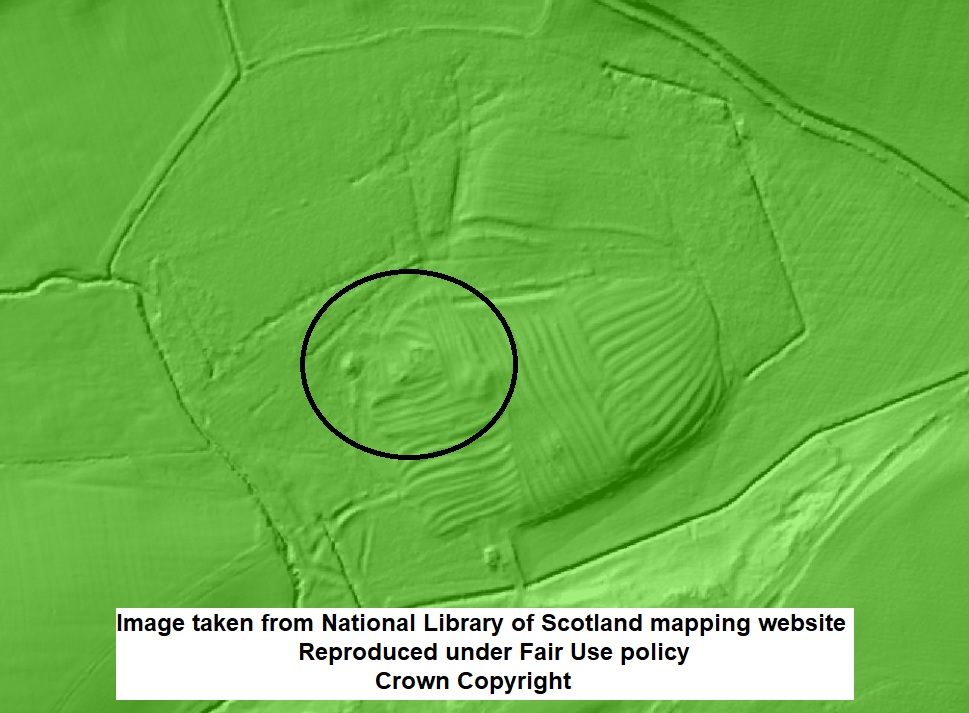
Bolton Hospital was a church foundation intended at its foundation in the 1220s to look after lepers. The location chosen was a low island surrounded by waterlogged land to the north of Bolton Hall and the church. The whole site has been cultivated for centuries, and the foundations of the buildings in the north-western portion, up to two metres high are overgrown although undressed masonry and old foundations are visible in places. However these are now too muddled to understand, although there is a quadrangular platform at the highest point, and a round mound on the boundary at the north-west edge, their purpose is unknown.
In 1335/36 a license to crenellate the “dwelling place of Boulton hospital” was granted, and soon after this date there is no further mention of lepers, taking a more monastic-type function. It seems most likely that the house of the keeper of the Hospital was a small tower house, and that the license was granted to make it more respectable – it was taken and occupied by supporters of Sir Gilbert Middleton, who attacked the bishop-elect of Durham, and his brother Henry Beaumont, who were accompanied by two cardinals. The cardinals he released, and the Beaumont brothers he imprisoned in Mitford Castle. The place was referred to as a pile, when it was taken from Middleton’s men – which has been interpreted as a pele tower, although this is disputed. Roger de Purvays, one of the men captured at Bolton, was named as “one of the greatest evil-doers on the March” by his captors. In 1318, Middleton was hung, drawn and quartered.
The hospital was dissolved in the Dissolution in 1547, and it is not at all clear what condition it was in. However, in 1575, “the site of the hospital with a garden, about 6 acres of meadow and a croft” (Historic Listing Entry) were granted away – this does not suggest the tower or hospital were in good condition by this date. Today, LIDAR shows the rig-and-furrow across the whole area, and this can clearly be seen from the road – there is a public footpath across the centre of the site which can be accessed from the lane alongside the church..
Become a supporter of my work to access a more detailed history