
Birdoswald Tower
Birdoswald Tower Details
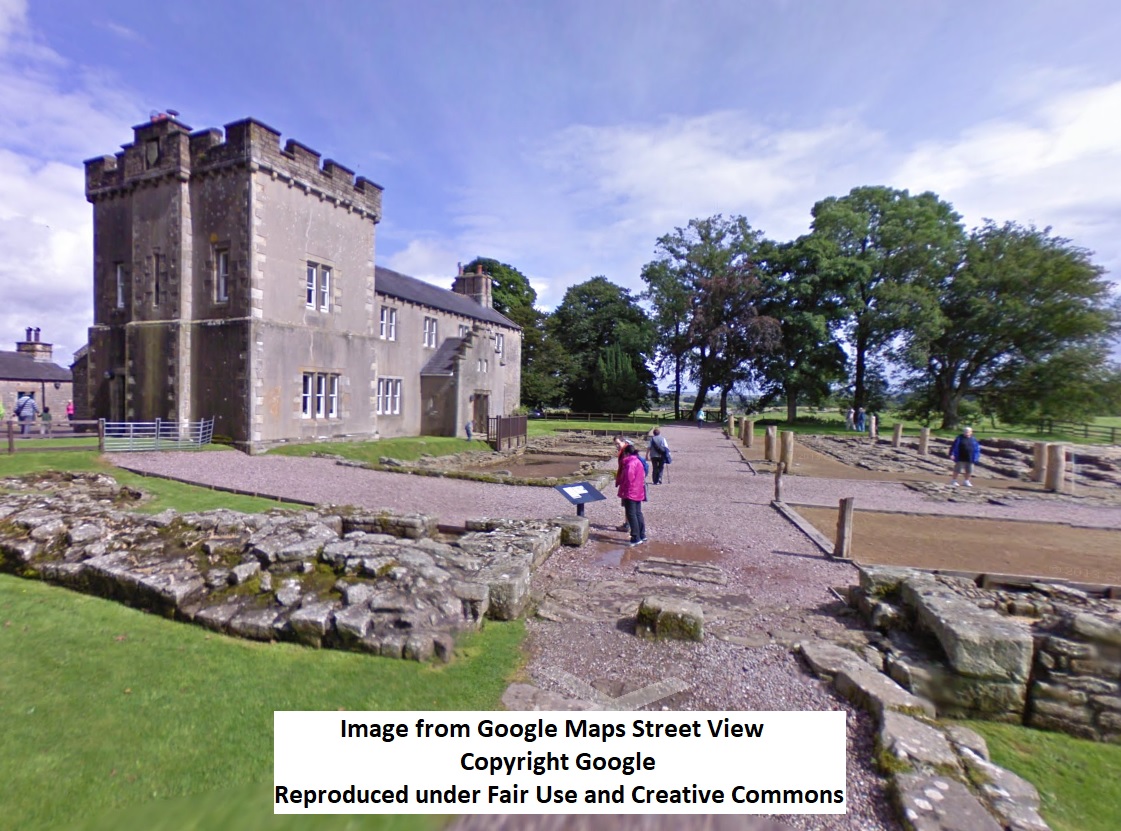
Birdoswald Tower was a small tower house erected within the walls of the old roman fort alongside the west gate. It was replaced with a bastle house, and this in time by the farmhouse with 19th century tower.
- Closest To: Gilsland
- Access: Chargeable Public Access
- Grid Reference: NY61486625
Birdoswald Tower was a small tower house erected within the walls of the old Roman fort. The walls of the Roman fort were certainly much depleted by the medieval period, and the earthworks associated with Hadrian’s Wall were probably much collapsed, but the strategic location combined with the standing masonry made it an obvious location to provide a defensive farmstead of sorts, and Birdoswald was held as part of the barony of Gilsland.
Gilsland had been in the hands of the Vaux and Multon families before it passed with marriage to Ralph Dacre, whose main seat was at Naworth Castle, and who had kidnapped his bride from Warwick Castle. Birdoswald was tenanted and occupied from the 12th century onwards, and the walls of the old fort seem to have been repaired.
Within the fort by west gate, a pele tower was erected, most likely in the 14th century for Dacre, his sons, or grandson William, and certainly before 1415, although the property still remained tenanted rather than a Dacre home. The foundation stones were new rather than robbed Roman masonry, and the foundations show that it was a building of similar size to the vicar’s pele at Corbridge. The history of the tower is not recorded, but excavation has suggested that it fell out of use and was replaced by c1600, when the gateway itself was converted into a complex of small buildings, with a large barn within.
The fort is open to the public through English Heritage, and the foundations of the tower are now hidden beneath those which can be seen in front of the farmhouse, which is provided with its own tower – all of which is 19th century.
English Heritage page for Birdoswald
Become a supporter of my work to access a more detailed history